
Dead volcanoes, drained plains and mountains nobody expects
The lakes sit inside craters, the plain was marsh until ninety years ago, and two hours from Rome you are close to two thousand two hundred metres.
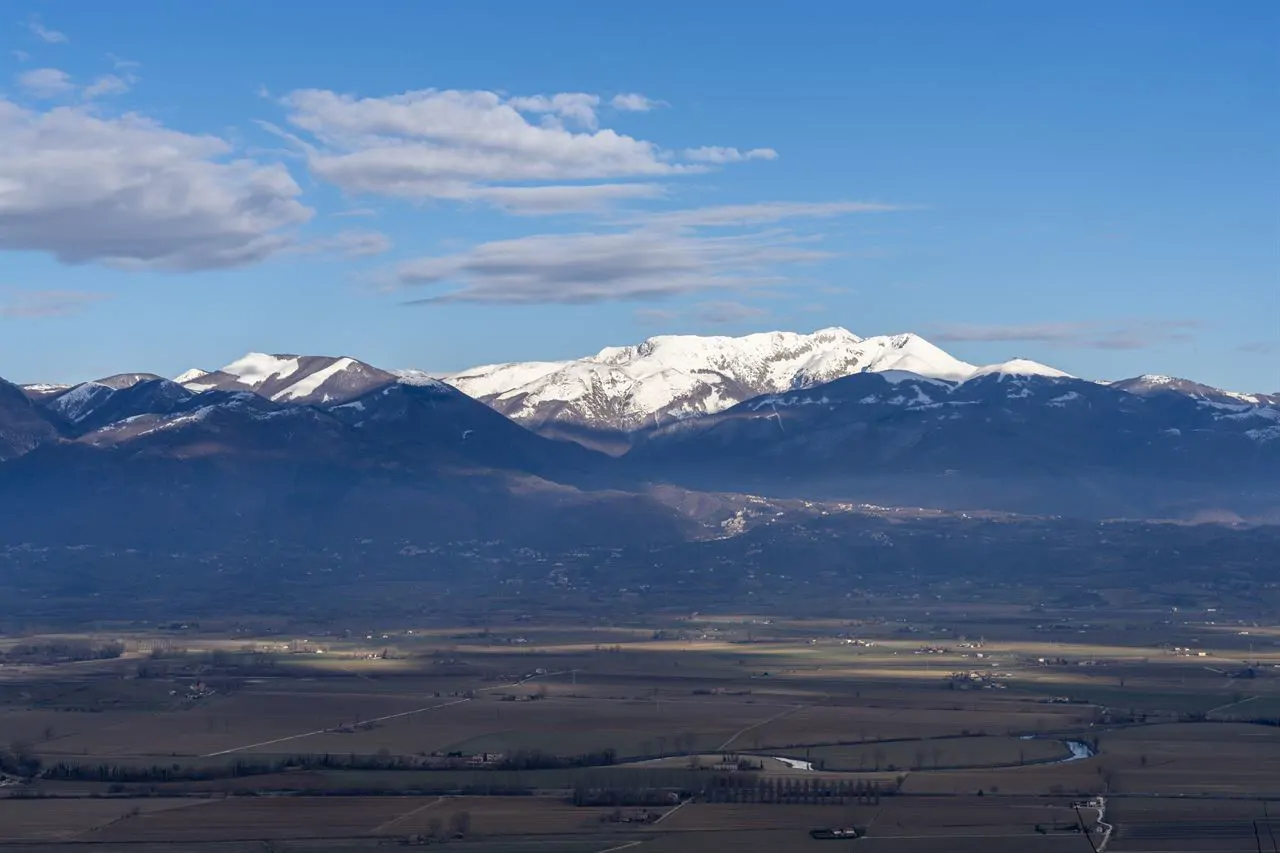
Lazio is made of two materials: tufa, which comes from the dead volcanoes of the north, and limestone, which forms the mountains to the south and east. Between them lies the plain, part alluvial and part taken from the water. Understanding that explains nearly everything else, from the villages perched on crags to the perfectly round lakes.
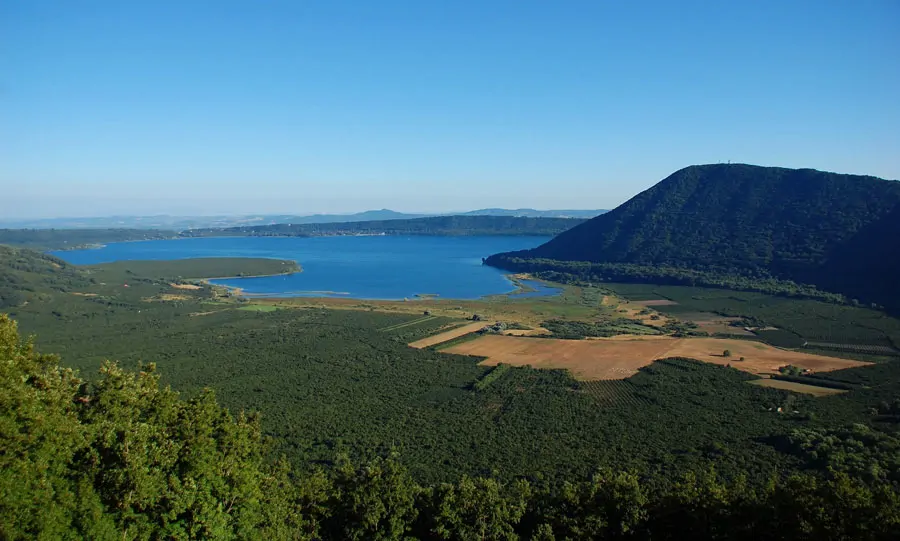
The crater lakes
Bolsena is the largest volcanic lake in Europe, a hundred and fourteen square kilometres with two islands in it. Vico is the most enclosed and the highest, inside a crown of woods. Bracciano is the closest to Rome and the busiest, and has supplied the city with water for centuries. Albano and Nemi, in the Castelli, are small and very deep. All five have the same origin and the same shape: a hole left by an explosion.
The plain that was not there
The Agro Pontino, between Latina and Terracina, was marsh and malaria until 1930. In seven years it was drained with canals and pumping stations, and new towns were built on it: Latina, Sabaudia, Pontinia, Aprilia. Today it is the most productive farmland in the region, flat and geometrical, and the Circeo park preserves the corner that stayed wild, with the dunes and the coastal lakes.
The mountains
East of the Tiber, Lazio is seriously mountainous. The Monti della Laga, on the Abruzzo border, pass two thousand two hundred metres; Terminillo dominates the Rieti basin; the Simbruini and the Ernici close off the Ciociaria with beech woods and high plateaux. To the south the Lepini and Ausoni come almost to the sea, and the road between Terracina and Gaeta runs beneath their walls.
The Tiber and the coast
The Tiber crosses the region for four hundred kilometres and ends at Ostia, where the shore is low and sandy for tens of kilometres. The coast changes only twice: at the Circeo headland, which rises abruptly to five hundred metres, and between Sperlonga and Gaeta, where the mountains reach the water.